SPANISH EMBUTIDOS, SAUSAGES AND CURED MEATS
A Guide to Spanish Embutidos, Sausages and Cured Meats
Spanish embutidos, sausages & cured meats come in a wide variety. These traditional sausages form an important part of the country’s food culture. You’ll find them hanging in traditional butcher’s shops, displayed on market stalls and served in tapas bars throughout Spain.

While some varieties are enjoyed across the country, others are closely associated with particular regions, where recipes and production methods have often been passed down through generations. Embutidos are generally made from seasoned meat and fat, sometimes with blood or offal, stuffed into natural or artificial casings. Some are cured and ready to eat, while others are sold fresh and need cooking. Spain also produces excellent cured meats that aren’t technically embutidos, including jamón and cecina. We’ve included a few of these specialities in our guide.
CHORIZO
Probably the best-known of all Spanish sausages, chorizo is popular both in Spain and around the world. Made primarily from pork, paprika, garlic and salt, it gets its distinctive red colour and flavour from pimentón. Depending on the variety, chorizo can be sweet, spicy, smoked, cured or sold fresh for cooking. Countless regional versions exist, but one particularly well-regarded example is Chorizo de Cantimpalos, produced in the province of Segovia in Castilla y León. This traditional sausage has Protected Geographical Indication (PGI) status and is made according to established regional production methods.

MORCILLA
Morcilla is Spain’s answer to black pudding, traditionally made with pig’s blood, pork fat and various seasonings. Recipes vary considerably by region, with some containing rice, onions, or other ingredients. Perhaps the most famous is Morcilla de Burgos, from Castilla y León, which is made with rice, onion, pig’s blood and spices. It has a distinctive texture and is particularly good sliced and fried. Other well-known varieties include morcilla asturiana, commonly used in traditional Asturian stews, and morcilla de cebolla, made with onion and found in several regions.

SALCHICHÓN IBÉRICO
Salchichón ibérico is a traditional cured sausage made from Iberian pork, seasoned with salt, black pepper and other spices. Unlike chorizo, it doesn’t normally contain paprika, giving it a different appearance and a more delicate, peppery flavour. It’s particularly associated with the Iberian pig-producing regions of Extremadura, Andalucía and Castilla y León. Usually served thinly sliced, it’s a popular addition to a plate of Spanish cured meats, often accompanied by bread and a glass of wine.

MORCÓN
Morcón is a thick, traditional cured sausage particularly associated with Extremadura and parts of Andalucía. It resembles chorizo but is generally made using larger pieces of pork, often from selected lean cuts, seasoned with pimentón, garlic and salt. The mixture is stuffed into a large natural casing, traditionally from the pig’s large intestine or caecum, giving morcón its characteristic thick, rounded appearance. Iberian pork versions are especially prized for their rich flavour and texture.

FUET
Originating in Catalonia, fuet is a long, thin, dry-cured sausage made from pork, pork fat, salt and seasonings, usually including black pepper. Its name comes from the Catalan word for whip, referencing its slender shape. Fuet is easily recognised by its pale outer coating, formed during the curing process, and has a relatively mild flavour compared with many other Spanish sausages. It’s commonly served sliced as a snack or tapa and is now widely available throughout Spain.

BUTIFARRA
Butifarra, or botifarra in Catalan, is a traditional pork sausage particularly associated with Catalonia and the Balearic Islands.
There are numerous varieties, ranging from fresh sausages intended for grilling to cooked and cured versions. One of the best-known is botifarra blanca, a pale sausage made with pork and seasonings. Another is botifarra negra, which contains blood and is darker in colour. Fresh botifarra is particularly popular in Catalonia, where it’s often grilled and served with white beans in the traditional dish botifarra amb mongetes. Related sausages are also found in other Spanish regions, including Aragón and Murcia.

SOBRASADA
Sobrasada, or sobrassada in Catalan, is one of the most distinctive specialities of the Balearic Islands, particularly Mallorca.
Unlike most cured sausages, it has a soft, spreadable texture and is made from minced pork, pork fat, paprika, salt and other seasonings. The mixture is stuffed into a casing and cured, developing its characteristic deep red colour and rich flavour.
Sobrasada de Mallorca has protected geographical status, while Sobrasada de Mallorca de Cerdo Negro is a particular variety made from the native Mallorcan black pig. It’s delicious spread on crusty bread, sometimes lightly warmed, and is often paired with cheese or a little honey.

CECINA
Although not technically an embutido, cecina deserves a place in any guide to Spanish cured meats. The most famous variety is Cecina de León, a traditional cured beef speciality from León province in Castilla y León, with Protected Geographical Indication (PGI) status. It’s made from selected cuts of beef, which are salted, traditionally lightly smoked, and then dried and matured over several months. The result is a dark, intensely flavoured cured meat with a firm but tender texture. Usually served in thin slices, cecina pairs well with good olive oil and bread. Unlike beef jerky, it’s generally eaten as a delicately sliced cured meat rather than a dried snack.

CHISTORRA
Chistorra, also known as txistorra in the Basque Country, is a long, thin sausage particularly associated with Navarra and the Basque Country. It’s made from pork meat and fat, seasoned with paprika, garlic and salt, giving it a reddish colour and a distinctive flavour.
Unlike fully cured chorizo, chistorra is generally a relatively fresh sausage that needs cooking. It’s traditionally fried or grilled and served in small portions, often with bread. It’s also a popular filling for bocadillos. Txistorra de Navarra has Protected Geographical Indication status, recognising its regional identity and traditional production methods.

LONGANIZA
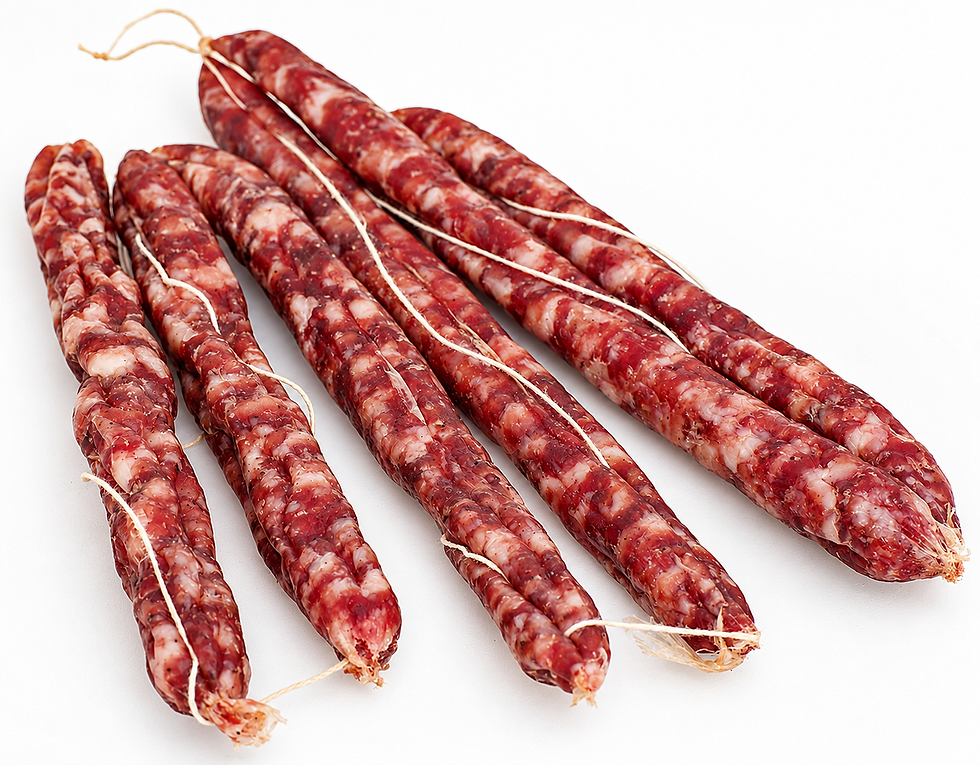
Longaniza is a traditional sausage found throughout Spain, though its ingredients, preparation, and appearance vary considerably by region. Usually made from minced pork and seasonings, it can be sold fresh for cooking or cured and ready to eat.
One particularly interesting variety is Longaniza de Pascua, a Valencian Community speciality. This slender, dry-cured sausage is traditionally associated with Easter celebrations and is often enjoyed as part of a picnic or snack. Unlike fresh longaniza, the cured Valencian version can be eaten without cooking.
LOMO EMBUCHADO
Lomo embuchado is another excellent Spanish cured meat, although it differs from traditional minced-meat sausages. It’s made from a whole pork loin, trimmed, seasoned and marinated before being placed in a casing and cured. Pimentón often features in the seasoning, though recipes vary. The result is a firm, lean cured meat with a rich flavour, while Iberian pork versions may have more pronounced fat marbling. It’s commonly served in thin slices as part of a selection of Spanish cured meats. Lomo ibérico, made from Iberian pork, is particularly prized.

SALCHICHAS
The Spanish word salchicha simply means sausage, and the country has numerous varieties. Like British sausages, they’re generally made from minced meat, often pork, mixed with fat, salt, and seasonings before stuffing into casings. Unlike many traditional cured embutidos, fresh salchichas need cooking. People commonly fry, grill, or prepare them in sauces, including salchichas al vino, cooked in wine. In some regions, people also cook sausages in cider, reflecting local culinary traditions.

BOTILLO
Botillo is one of El Bierzo’s most distinctive traditional meat specialities, a region in the province of León. Known as Botillo del Bierzo, it has Protected Geographical Indication (PGI) status. It’s made from seasoned pork cuts, particularly ribs and tail, mixed with pimentón, garlic, and salt, then stuffed into a natural casing. The botillo is then smoked and cured, giving it its characteristic flavour. Unlike ready-to-eat cured sausages, it must be thoroughly cooked before serving. Traditionally, it’s simmered and served with potatoes and vegetables, making it a hearty dish particularly popular during the colder months.

DISCOVERING SPAIN THROUGH ITS EMBUTIDOS
One of the pleasures of travelling through Spain is discovering how much the local food changes from one region to another. From the paprika-rich chorizos of Castilla y León and Extremadura to the delicate fuet of Catalonia and the spreadable sobrasada of Mallorca, each speciality reflects its region’s traditions and ingredients. Traditional markets, butcher’s shops and tapas bars are among the best places to explore these regional products. Whether served as a simple tapa with bread, included in a hearty stew or enjoyed as part of a selection of cured meats, Spain’s embutidos remain an essential part of its gastronomic heritage.
You can follow us here;
INSTAGRAM - @renoirspanishguides
YOUTUBE - Renoir Spanish Guides
MIXCLOUD MUSIC - Mikeyb
TIKTOK - Renoir Spanish Guides
TWITTER - @RenoirGuides
FACEBOOK - Renoir Spanish Guides - Food, Drink & Places
Please click on the link below ☕. Thank you.


